Product translations
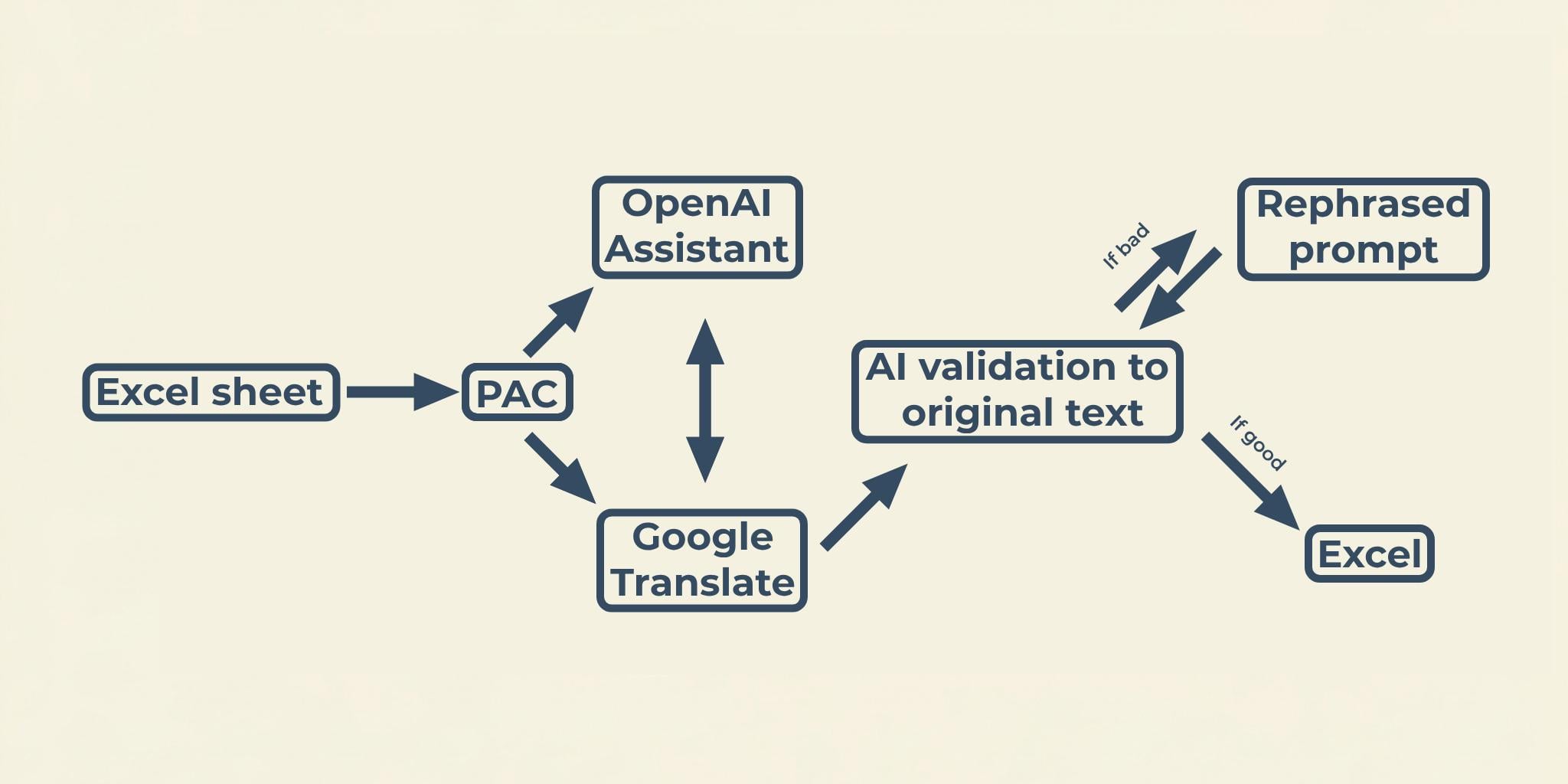
An early sketch of our translation workflow - while the process has evolved significantly since this initial draft, the core principles remain.
The challenge: it’s "just a translation"
When I was approached about creating a streamlined translation process, I initially thought it would be a straightforward technical challenge. Take content from an Excel sheet, run it through translation APIs, and return the results. Compared to all the complex calculations AI is capable of nowadays, a simple translation should be simple enough, right?
I couldn't have been more wrong.
What began as a seemingly simple automation project evolved into a fascinating journey through linguistic complexities, cultural nuances, and human expectations that technology alone couldn't address.
The technical foundation: Power Automate
The translation system is built on Microsoft Power Automate, which serves as the orchestration layer connecting the different components:
- Data source integration: We start with structured content in Excel spreadsheets, which contain the original text segments requiring translation.
- Translation engine connections: The flow connects to multiple AI translation services, primarily using OpenAI's Assistant API for more nuanced, context-aware translations.
- Validation framework: Perhaps the most critical technical component - a multi-stage validation system that identifies potential issues during and after translation.
Building intelligence into the process
The core of the system lies in how it handles validation - something I quickly realized was essential to combating AI hallucination: